The AI Confidence Method
The AI judgement layer you've been missing
Measure, build and prove AI capability across your whole workforce.
Trusted by 1,000+ organisations










How the AI Confidence Method works
A workforce-wide AI change programme that helps you measure, build and prove AI capability across your organisation.
The Alignment Index tests how confident people feel about AI against what they can actually do, anonymously, across the whole workforce.
The Alignment Index ↓ BuildFoundations: twelve human-led lessons that give people the judgement to use any AI tool well, with Ada, our AI tutor, inside every lesson.
Foundations and Ada ↓ ProvePeople are certified, then re-measured on the same questions, so you can show how capability and risk behaviour have changed.
Certification and reporting ↓What's in the report
- How people feel about AI right now
- The gap between what people believe they can do and what they demonstrate
- Where the risk sits, and the behaviours driving it
- Capability gaps by topic, mapped to specific training
Anonymous by design
No names, emails or IDs. You see groups, never people.
Runs where your people are
A standalone link or a module inside your LMS.
Use it on its own
Run it alongside your own training to see where to point it.
Build: Foundations
The Foundations programme builds judgement
Foundations teaches people how AI models work, where they go wrong, what is safe to share and when output needs a human check. It applies to any AI tool your organisation uses.
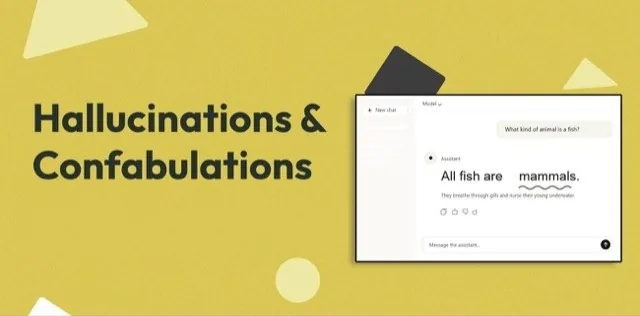
Hallucinations & Confabulation
The twelve lessons
On-demand, around 20 minutes each. Customisable to your organisation.
- 01Building Confidence: Start Your AI Journey
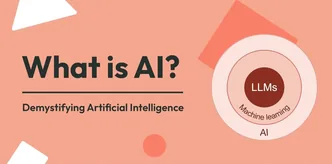
- 02What Is AI? Demystifying Artificial Intelligence
- 03Hallucinations & Confabulation
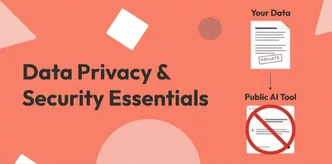
- 04Data Privacy & Security Essentials
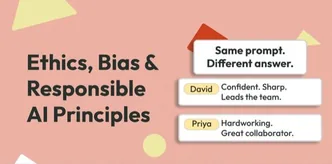
- 05Ethics, Bias & Responsible AI Principles
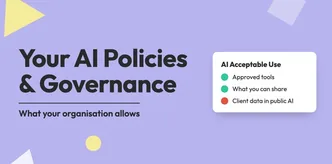
- 06Your Organisational AI Policies & Governance
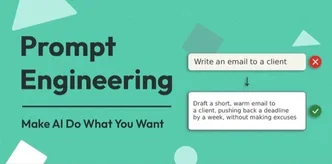
- 07Prompt Engineering
- 08Setting Up Your Tool to Work for You
- 09Simple AI: 5 Minutes That Will Save You Hours
- 10Peer Review: Getting Second Opinions
- 11How to Use AI Without Losing Your Professional Identity
- 12Generative vs Agentic AI
Prove
Show impact and ROI
Everyone who passes Foundations is certified, and results from the check-ins and another Alignment Index are combined to demonstrate improvement and progress and help you prove ROI.
 Alignment Index: over timeSample report
Illustrative figures

James WannProgramme lead
Created and presented by James Wann
James was part of the founding team at Assemble You and leads AI Systems and Innovation across the business. He is the primary author of the curriculum and presents every lesson on camera.
Member of the British Computer Society (BCS), BCS-certified in the Ethical Build of AI. Imperial College Business School, AI for Business Transformation.
What people say about James
“James does what he says he'll do, and what he produces actually works. He has consistently provided training that shattered engagement expectations, and been genuinely well-received.”
 Andrea SennettDirector, Content Partnerships, Docebo
“He's always been exceptionally curious and insightful, particularly with respect to AI, from well before the GenAI explosion. He's also deeply empathetic and articulate, two rare and essential gifts for those explaining AI to the uninitiated.”
 Marc Zao-SandersAuthor of Timeboxing, Founder of Filtered
“James is one of the few people outside of my field I can have a substantive technical conversation with. He gets the actual mechanics, not just the headlines. That's why his training is great.”
 James Wann
Need something very specific to your organisation?
Get live classes (60 minutes) with an AI expert.
- Keynote for the whole organisation
- Foundational workshop for a department
- Strategic planning with leadership
- Targeted briefing for risk, legal, compliance or IT
Awards and accreditation
Start-Up of the Year
British Training Awards 2026
Innovator of the Year
OpenSesame Publisher Awards 2025
L&D Provider of the Year
British Training Awards 2024

Start-Up Learning Provider, Silver
The Learning Awards 2024
Cyber Essentials Plus
Verify our certificate
Aligned to



After Foundations, train on the tools
Foundations works with any AI tool. When you roll out a specific tool, add our training for it.




FAQs
Want our full reading list, citations or DPA for your legal team? Ask and we'll send them the same day.
What is the AI Confidence Method?
The AI Confidence Method is a workforce-wide AI programme from Assemble You that builds the judgement to use AI safely and effectively.
It measures AI confidence and capability with the Alignment Index, builds skills through twelve Foundations lessons with Ada, our AI tutor, and proves results through certification and re-measurement. It works with any AI tool your organisation uses, including Copilot, ChatGPT, Claude and Gemini.
Is this AI training or an assessment?
The AI Confidence Method is both AI training and an AI assessment.
The Alignment Index is an anonymous assessment of AI confidence and capability across your workforce. Foundations is the training that closes the gaps it finds.
You can also run the Alignment Index on its own alongside training you already have.
What does “Measure, Build, Prove” mean?
Measure: the Alignment Index finds the gap between how confident people feel about AI and what they can actually do.
Build: twelve Foundations lessons, with Ada inside each one, build the judgement to use AI well.
Prove: people are certified, then re-measured on the same questions so you can show how capability and risk behaviour have changed.
Does every employee need to complete the whole programme?
No. The AI Confidence Method can be fully customised to your organisation. We can remove modules, add modules or shorten them, and tailor scenarios to your industry and your business.
Ada, your AI tutor and guide, can also be contextualised with your organisational policies.
If you want something more specific, you can add live 60-minute classes with an AI expert, from a keynote for the whole organisation to a targeted briefing for risk, legal, compliance or IT.
What is the Alignment Index measuring?
Five things:
- Attitude: how people feel about AI, including trust and willingness to engage.
- Capability: what people can actually do, scored from realistic work scenarios, never from self-rating.
- Perceived alignment: whether people believe leadership is handling AI in their interest.
- AI usage: what people are using AI for at work, and how.
- Honest disclosure: whether people have misused AI, for example by pasting confidential data into a public tool.
Results are reported at group level, cut by site, department or any grouping you choose.
What is Ada?
Ada is an AI tutor and guide built into every Foundations lesson. Ada helps learners reflect, challenges vague answers and guides them through the material.
Ada can be fully contextualised with your organisational policies, tools and terminology. You send us the documents and we build and maintain Ada's knowledge base.
Free-form conversations with Ada are never used as Alignment Index data.
Can the programme work with our existing AI training?
Yes. We've found Foundations complements a lot of existing work, because it focuses on how AI works and how to judge its output, which applies to any tool.
Tool-specific training, ours or yours, sits on top of what you already have.
How is progress measured?
We work closely with you to report progress at a cadence that suits you.
We retest with the Alignment Index at a later date, on the same questions, so you can show ROI.
Everyone who passes Foundations is certified.
How is workforce data protected?
The Alignment Index collects no names, emails, LMS IDs or employee numbers, so its data is not personal data. Results are group-level only, above an agreed minimum group size.
Our contract bars use of results for promotion, performance or disciplinary decisions.
Data is held in London, never leaves the UK, and no AI vendor has access. Ada runs on Microsoft Azure OpenAI, hosted in the UK.
Assemble You is Cyber Essentials Plus certified and a full DPA is available.
How long does the programme take?
Foundations is twelve on-demand lessons of around 20 minutes each: a 6 to 10 minute video, followed by about 10 minutes of exercises. People complete them at their own pace.
The Alignment Index takes about ten minutes.
Where does the content come from?
Every claim in a lesson traces back to a named, peer-reviewed or institutional source, for example Vaccaro et al. on complementarity, Mollick & Mollick on tutoring, and Brynjolfsson, Li & Raymond on productivity. We leave out vendor marketing dressed up as evidence.
Who writes and presents the lessons?
James Wann and the Assemble You learning team write every lesson, an editor reviews each script, and James presents on camera. Human-led throughout.
Is it accessible?
Every lesson is built to WCAG 2.1 AA, and glossary PDFs are produced to AA.
Which frameworks is it aligned to?
EU AI Act Article 4, NIST AI RMF, UNESCO and WEF guidance, ICO guidance and ISO AI standards.
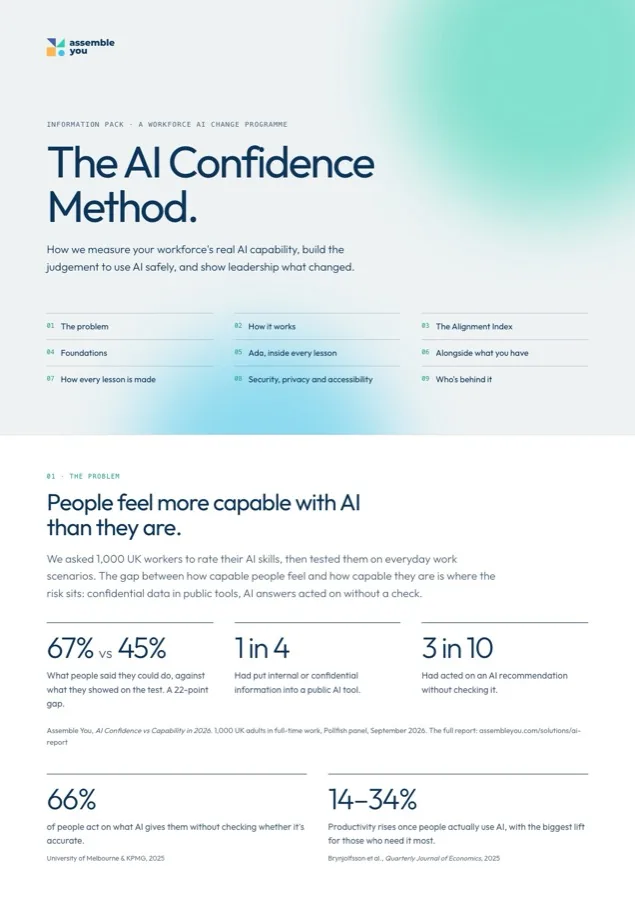
Get the full detail in the info pack
Everything your L&D, risk and legal teams will ask about, in one document.
- How the Alignment Index measures, and when you get each report
- All 12 lessons and the four live class formats
- How Ada works, and how it's kept apart from the measure
- How every lesson is made and sourced
- Security, privacy and accessibility
Get the info pack